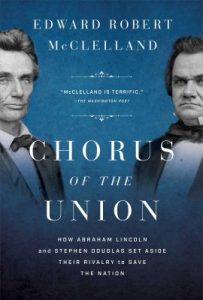
Edward Robert McClelland’s “Chorus of the Union” is a testament to the rivals, Abraham Lincoln and Stephen Douglas. Their legendary debate for the 1858 senate race cemented them as eternal rivals to the public eye. But, when the union was threatened by the start of the civil war, the two put their old rivalry aside for the greater good. Their rivalry and reconciliation changed history.
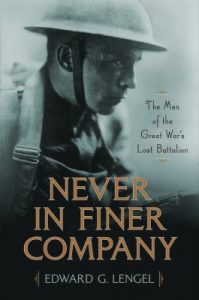
Edward Lengel wrote this account about the “Lost Battalion” in the first world war. These six-hundred American Soldiers were trapped by German Troops in a ravine in the Argonne Forest. After a week of constant shelling they walked out with less than a third remaining. This is their tale of both heroism and terrible losses in the midst of a devastating war.
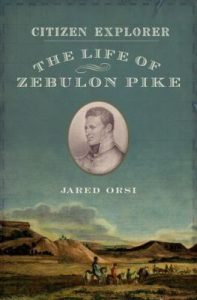
Jared Orsi created this interesting biography of the explorer Zebulon Pike. While Pike wasn’t as acclaimed as some of his contemporaries, his exploration of a large portion of the American interior still stands the test of time. This book details his life all the way to his victory and death in the Battle of York during the War of 1812. This is the account of a remarkable American explorer.
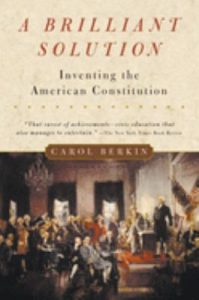
In the years immediately after the Revolutionary War the country was near bankruptcy, and the Articles of Confederation proved to be a disaster. In what could have been an overly complicated book, author Carol Berkin tells the tale of how men from a variety of backgrounds invented an intricate Constitution, with the goal of creating a balance of power and preserving liberty.
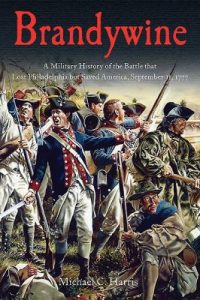
Michael C. Harris recounts the disastrous Battle of Brandywine Creek with this book. He details how General George Washington’s attempt to stop the British forces from taking Philadelphia (where the continental congress was meeting) failed, and how Washington used the lessons from that failure to ultimately defeat the British and win the American Revolution.
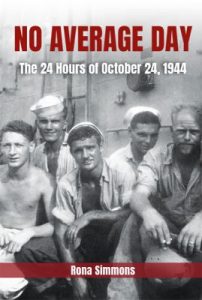
Through painstaking research, Author Rona Simmons found an unusual, and highly disturbing fact. The deadliest day in WWII for Americans wasn’t at Pearl Harbor or D-Day, rather it was October 24, 1944. Through several individual stories she recounts the horrors that they went through during what had been thought to be an “average day” in WWII.
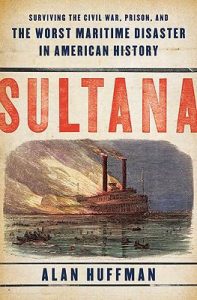
In the worst maritime disaster in American history, the steamboat Sultana, which was carrying more than twenty-one hundred recently released Union POW’s, exploded killing nearly everyone onboard. Author Alan Huffman excellently recounts the events that led to this disaster, and why this disaster was overshadowed by the end of the civil war.
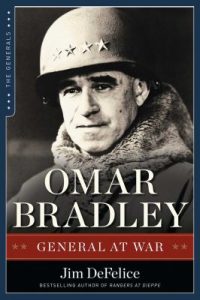
Military history buffs will relish this biography of Clark, Missouri’s own Omar Bradley. In this incredibly detailed account by Jim Defilice, everything from military organization to politics are laid bare for the reader to examine. This is a fascinating insight into the mind of “The GI General”, his campaign to defeat Nazi Germany, and his small-town Missouri roots.
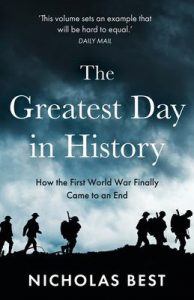
This exhilarating story, written by Nicholas Best, is about the events leading up to the 1st World War’s end on November 11, 1918. The author goes into great detail into the minds of both sides during the closing days of the war. Pay close attention to the brief reference to Private Henry Guenther, a German American infantry man who ironically was the last casualty of the war.
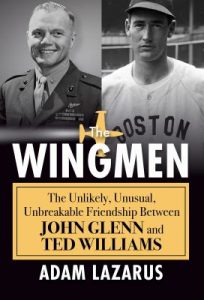
In this unique twist on the Korean war the author, Adam Lazarus, weaves a story of how two iconic American heroes, the future astronaut John Glenn and Baseball legend Ted Williams wind up on the same airbase in South Korea. The two pilots, despite their wildly diverging backgrounds, bonded while flying eight missions together. This unlikely duo would define their generation.
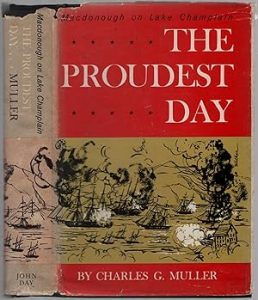
In one of the most pivotal battles of the war of 1812, Lieutenant Thomas Machonough managed to best a superior English fleet in the narrow reaches of Lake Champlain. This stunning victory even influenced the peace terms that ended the war. This book, written by Charles G Miller, is a riveting account of this battle and of the Lieutenant who made it happen against all odds.
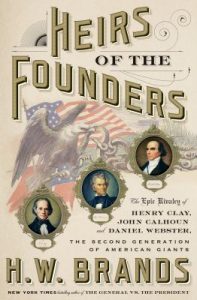
H. W. Brands writes this account on the three giants of the early 18th century. The politicians Henry Clay, John Calhoun, and Daniel Webster all came from wildly different backgrounds. Their arguments over states rights and slavery would change the United States forever by paving the way for the Civil War. A must-read for any history buff of the pre-war period.
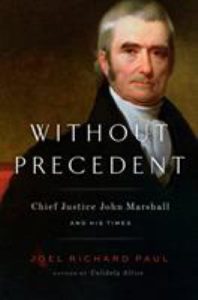
A founding Father who is sometimes overlooked, Chief Justice John Marshall helped solidify both the U.S Constitution and our judicial branch. Marshall had an incredible resume, starting out as a simple frontiersman to a Revolutionary War soldier (fighting at the Battle of Brandywine) to diplomat, to Secretary of State, and finally, Chief Justice of the Supreme Court.
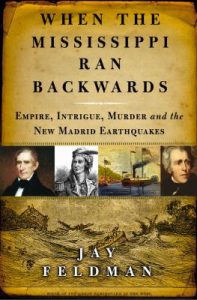
Author Jay Feldman brilliantly weaves multiple story lines together that include the Native American Prophet Tecumsah, a slave murder by two of Thomas Jefferson’s relatives, and the New Madrid earthquakes of 1811 and 1812. Those three quakes would have measured over 8.0 on the modern Richter scale and literally forced the Mississippi to flow backwards.
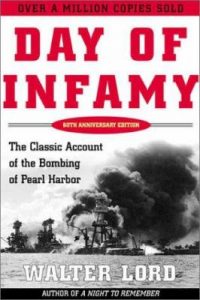
Over six decades ago author Walter Lord wrote this definitive piece on “A date which will live in infamy”. This account of the bombing of Pearl Harbor is told through the eyes of those who lived it, as the author combed through countless testimonies and interviews. A truly remarkable book that chronicles one of the darkest days in American History.
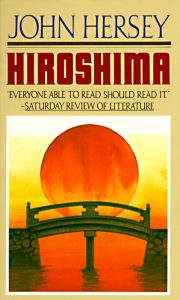
John Hersey writes this book on the dropping of the atomic bomb. He expertly explores the human costs of the bombing through the eyes of six survivors. This classic piece of history, written just after the end of the war, remains as vivid and haunting as it did the day the bombs first fell. This is a must read for anyone looking into the history of WWII.
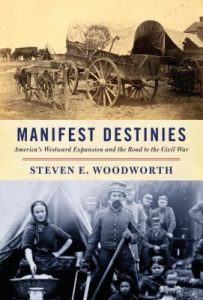
Stephen Woodworth’s excellent book captures a dynamic America in the 1840s as it surges Westward, expanding into Texas, New Mexico, the Pacific Northwest, and California. It recognizes the significance of the Gold Rush, the roles that the telegraph and the railroad served to accelerate this growth. A worthy read of the history of the United State’s drive from “Sea to shining Sea”.
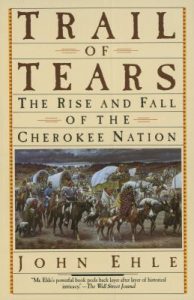
Triggered initially by the Indian Removal Act of 1830, multiple tribes in the South were evicted from their ancestral lands. Author John Ehle’s focus is on the seventeen thousand Cherokee and African Americans who were forcibly removed to what is now Oklahoma in the years 1838-1839. Tragically thirty-five hundred died along the way in what became known as the Trail of Tears.
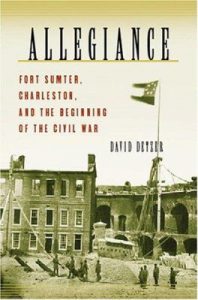
Skillfully researched and wonderfully written, author David Detzer, portrays the 6 months from Lincoln’s election to the Confederates firing upon Fort Sumter in Charleston’s harbor. The book focuses on the political machinations on both sides of the future Union and Confederacy, the people of Charleston, South Carolina, and most importantly, major Robert Anderson, commander of the fort.
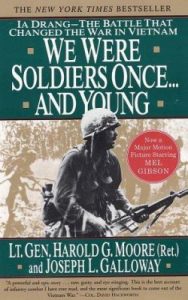
Army General Hal Moore and embedded reporter Joe Galloway recount a riveting story of one of the earliest battles of the Vietnam War: the Battle of La Drang in 1965. The book also helps visualize the use of Army helicopters to bring in reinforcements and remove the wounded (Air Calvary). The book was turned into a movie of the same name starring Mel Gibson.
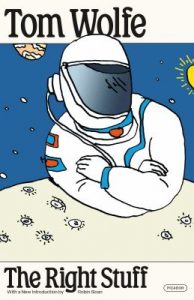
Popular author Tom Wolfe’s “The Right Stuff” juxtaposes the carefree behavior of NASA’s 7 Mercury Astronauts in the early 1960’s to the flying of experimental high speed aircraft in the desolate Mojave Desert. From the man who first broke the sound barrier but never became an astronaut, Chuck Yeager, to the first American in space, Alan Shepard, this book is a blast!
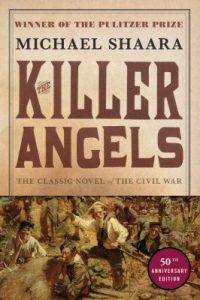
The second book in Michael Shaara’s epic Civil War Trilogy, this historical novel earned him the Pulitzer Prize. Told from the perspective of people who were there it expertly tells the story of Gettysburg. This book has a reputation for excellence to the point that it was once required reading for the US Army officer Candidate School! A true must read for any budding Civil War historian.
It only took 102 minutes for the North Tower of the World Trade Center to collapse after American Airlines Flight 11 slammed into the structure. New York Times reporters Jim Dwyer and Kevin Flynn were able to access an incredible amount of oral histories from first responders and tower survivors to create a masterful, readable account of this national tragedy of September 11, 2001.
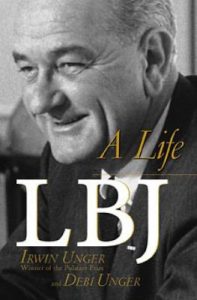
Author Irwin Unger writes this fascinating biography of an incredibly complex man whose presidency ushered in a vast set of social programs including Medicare, Medicaid, Civil Rights Initiatives, funding for the National Endowment for the Arts plus more. Though unable to draw the Vietnam war to a conclusion, LBJ is still noted as one our Top Ten Presidents by many!
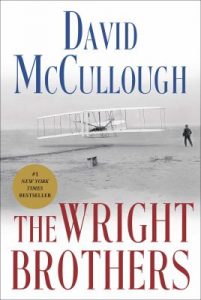
Proclaimed author David McCullough does a deep dive into the genius mechanical aptitude and singular focus of Wilber and Orville Wright. Their incredible drive would lead them to make the first airplane at great risk to life and limb. Despite not having much in the way of formal schooling, these two bicycle mechanics would usher in the age of aviation.
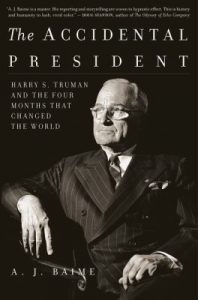
In this fast-paced book, by the author AJ Blame, president Harry S. Truman’s first four months in office dealt with more critical decisions than any other Presidency. This Missouri politician’s accidental presidency decisively juggled the dropping of two atomic bombs, thwarting Stalin’s attempted last minute grab of Denmark, and the creation of the United Nations.
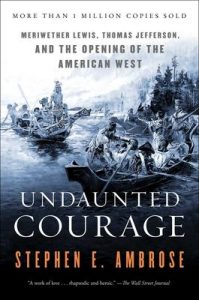
This account by Steven E Ambrose is perhaps the most definitive work on Lewis and Clark’s expedition to the Upper Northwest, and President Thomas Jefferson’s faith in their Corps of Discovery. This book chronicles Jefferson’s long held ambition to the fates of the explorers afterwards. A must- read story about the very beginnings of America’s manifest destiny.
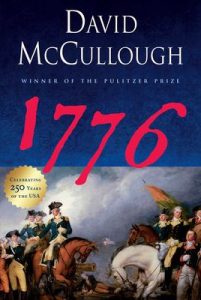
This is an extraordinary book of the most critical year of the Revolutionary War by master historian David McCullough. This extensively researched book goes into both General George Washington and his rival General William Howe as they waged war. Despite his lack of experience Washington was able to keep his army intact and eventually turn the tide.
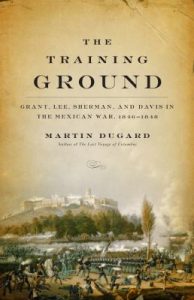
The Mexican-American War proved to be the proving grounds for many young officers who would go on to be generals in the Civil War. This must read book by Author Martin Duggard explores the war that would refine familiar names such as Ulysses S. Grant, Robert E. Lee, Jefferson Davins, William T. Sherman, and James Longsheet into the giants of the Civil War.
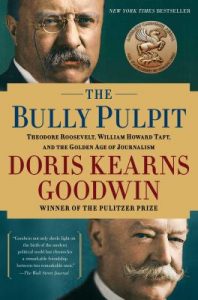
Doris Kearns Goodwin’s Pulitzer Prize winning book captures Theodore Roosevelt ascending into the presidency in 1901. Frustrated by an inactive Congress and its inability to rescue the middle class, Roosevelt used the Muckraker press to help him establish social reforms. But after his presidency the rift between himself and his handpicked successor, William Taft, brought it to an end.
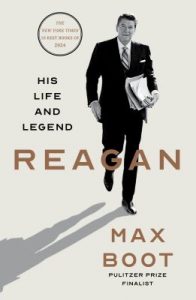
The Pulitzer Prize finalist, Max Boot’s, biography of the 40th President continues to intrigue readers in the details of Ronald Reagan’s life. This work delves back into his alcoholic father, his Governorship of California, and lastly his Presidency. Despite significant opposition Reagan managed to stabilize the country and made Americans feel pride in their country again.
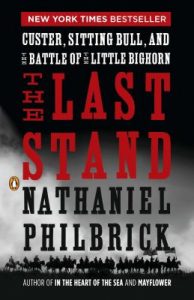
One hundred and fifty years ago this June, in the Little Bighorns Colonel Custer’s 7th Cavalry was decisively defeated by the Lakota Chief Sitting Bull. This book, expertly written by Nathaniel Philbrick, goes into the fine details of the battle, the causes of the Great Sioux War of 1876, the people involved, and the decisions that lead to the infamous “Custer’s Last Stand”.
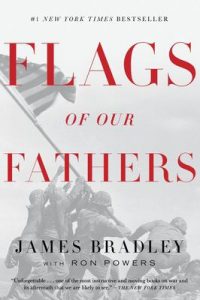
Written by James Bradley this book is about one of the most iconic photographs of World War II. During the battle of Iwo Jima, five marines and a navy copsman scaled Mount Suribachi and planted the U.S. Flag, while battle still raged below them. This account, written by the son of one of the remaining marines, tells the tale of both valor, and the terrible human cost of the battle.
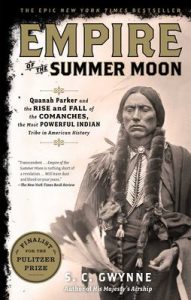
Author Gwynne’s wonderful book “Empire” is a beautifully written narrative of one of our most hideous periods in American history. It tracks the attempted annihilation of the powerful Comanche tribe of the American West. Interwoven into this account is the story of a kidnapped nine-year old girl whose mixed blood son becomes the last and greatest Chief of the Comanches.
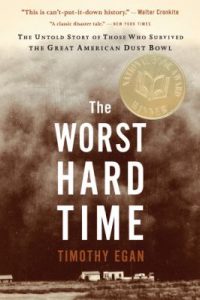
Whereas John Steinbeck’s characters left the Southern Great Plains during the Great Depression, historian Timothy Egan focuses on those who stayed. This is the story of those who endured the Depression’s evil twin sister, the Great American Dust Bowl. They watched their beautiful soil dry into a fine black sand which devastated entire towns and infected their children with pneumonia.
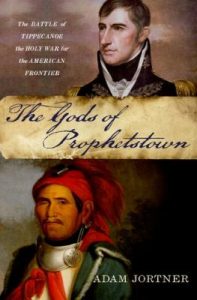
This account, written by Adam Jortner, is of Techumseh’s Confederacy rise and fall. When war leader Techumseh’s drunken younger brother Tenskwatawa uses a solar eclipse to gain a reputation as a prophet the die is cast for the Native Americans living west of the Appalachians. They were ultimately crushed by General Willam Henry Harrison during the war of 1812.
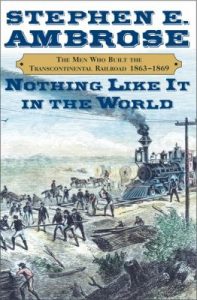
Author/Historian Stephen E. Ambrose tackles the story of the greatest American engineering achievement of the 19th century: the building of the transcontinental railroad. This massive undertaking spanned almost two thousand miles of continuous tracks linking Ohio with California. This 18th century marvel changed the fate of the American West Forever.
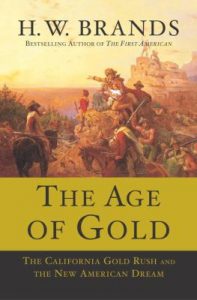
When gold was discovered on the American River above Sutter’s Fort in 1848 it set off a tidal wave of people from around the world flocking to California. Author HW Brands sifts through the history of the California Gold Rush. This book invites readers to view the lives of some of the most interesting people in the eighteenth century as they scrambled for any sign of gold.
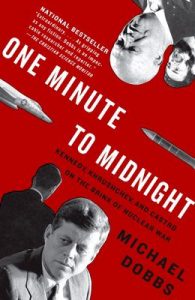
In our nation’s history we’ve never been closer to nuclear war than the Cuban Missile Crisis. Journalist Michael Dobb writes the book “One Minute to Midnight” on one of the most risky Saturdays in history. This account goes into details of JFK’s and Khrushchev’s epic 1962 staredown. A must read for anyone looking into the history of the Cold War.
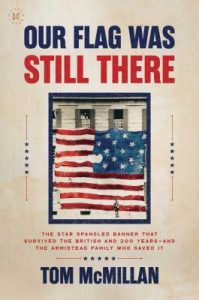
When Francis Scott Key penned our national anthem his eyes were fixed on what would become the most famous flag in our history. This flag, nicknamed “Old Glory”, somehow managed to survive two centuries of turmoil and strife and is now displayed in the Smithsonian. Author Tom McMillan expertly delves into the history of its incredible survival and the family who kept it intact.
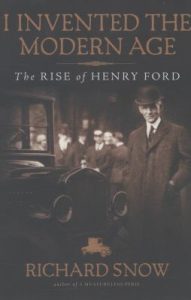
When the first of the “Model T” rolled out of Henry Ford’s automobile plant, the world would never be the same. In this revealing book Author Richard Snow details the life of the man who brought “mass production” to our world. His drive, fearlessness, and resourcefulness not only created the first mass produced automobile, but it also paved the way for the modern era.
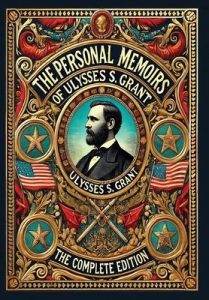
Written with extreme accuracy and humility, ex President Ulysses Grant died just 3 days after completing this autobiography. Knowing that former Presidents of that time did not receive a pension, Mark Twain worked to ensure its publication. Former Civil War veterans dressed in their uniforms sold the book door to door, generating a retirement fund for Grant’s family.
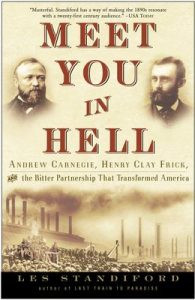
Author Les Standiford spins this fascinating tale from the “Gilded Age”. The two partners Andrew Carnegie and Henry Clay Frick created the massive Carnegie Steel (eventually became the US Steel Corporation) but had a falling out after the Homestead Steel Strike of 1892. These two titans would go on to become some of the richest men of their time.
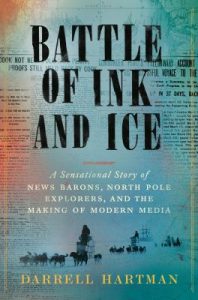
In the early 1900s dollars flowed readily to anyone who could make the news, and the race to the North Pole was no exception. In this excellent book, by Darrell Hartmen, the ties between the race to the North Pole and two rival New York Newspapers are laid bare. As they battled to defend rival explorers their coverage would mold the newspaper industry for decades to come.
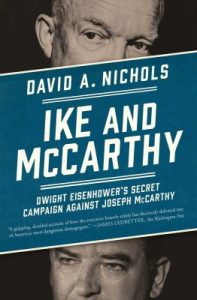
Author David A. Nichols writes this book on the political struggle between President Dwight D. Eisenhower and Senator Joe McCarthy. Rather than directly confront McCarthy, Eisenhower chose a subtler approach and discredited him behind the scenes. He was able to use the senator’s actions against him, and in doing so, ended McCarthy’s witch hunt.
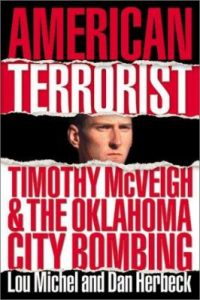
Authors Lou Michael and Dan Herbeck wrote this terrifying book on the terrorist Timothy McVeigh. Through a painstaking process the two authors delve into the details of the 1995 Oklahoma City Bombing and McVeigh’s anarchistic motovations. This terrible bombing ended the lives of one hundred and sixty eight people including nineteen children.
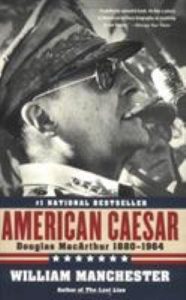
One of the most enigmatic generals of his time was General Douglas MacArthur. Author William Manchester looks into MacArthur’s often paradoxical history. MacArthur was right in the thick of things throughout World War I, World War II, the post-war government in Japan, and in the Korean War. In doing so he left his mark on history and some of the biggest controversies of his era.
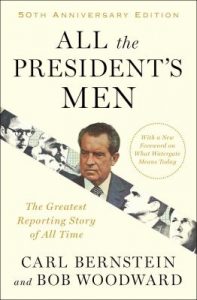
Written by the two Journalists who made it happen (Carl Bernstein and Bob Woodward) they tell the riveting tale of the Watergate scandal. While checking out the fumbled Democratic Headquarters break-in, they uncovered a story that stretched all the way back to the president Richard Nixon. This story earned the name of “the greatest case of investigative journalism”.
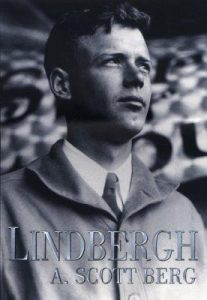
This fascinating biography by author Scott Berg pries into the life of Charles Lindberg. His legendary one-man transatlantic flight would cement his place in the public mind, as would the tragic abduction and death of his firstborn son. But he ended his career as a pariah, as he opposed the war with Nazi Germany. This is the biography of a complicated man.
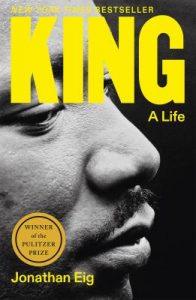
Among America’s martyrs Dr. Martin Luther King Jr. remains the most important. Author Johnathan Eig digs into the history of this brilliant man who changed the course of the civil rights movement. Dr. King managed to unify the movement, even while he lived each and every day with a target on his back. This is the story of a great American who gave millions hope.
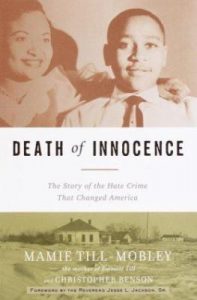
The abduction and murder of the young Emmett Till in a small Mississipi delta town galvanized the civil rights movement. Written by Christopher Benson and coauthored by Mamie Till- Mobley (the mother of Emmett Till) this is the true story behind the heinous murder and the farcical trial afterwards (ruled not guilty despite clear evidence) that shocked the nation to its core.
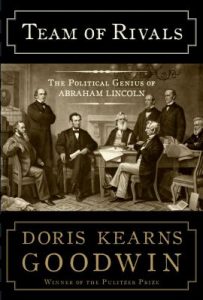
When Abraham Lincoln rose to the presidency he left several of his rivals in the dust. In this excellent book by Dorris Goodwin, it describes how Lincoln was able to turn those rivals into leaders in his presidential cabinet. Lincoln’s political genius would create one of the most effective and talented cabinets in history, one that would change the course of the Civil War.
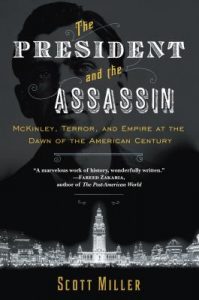
The dawn of the twentieth century was a time of unprecedented change in the United States. As the country turned from an agrarian society to an industrial one, it caused a wedge between the “classes”. In this excellent book author Scott Miller contrasts the lives of two different men: President William McKinley and the anarchist who would kill him, Leon Czolgosz.
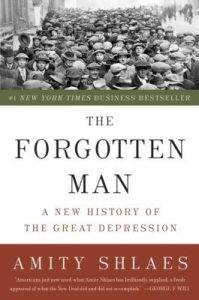
Amity Shlaes, a noted financial reporter, takes a fresh revisionist view of the Great Depression from a political, economic, and societal perspective. While weaving in the stories of “the forgotten man” she adeptly describes the conditions that caused the Great Depression and analyzes the “New Deal” attempt to correct it. Her conclusion is that it may have prolonged it.
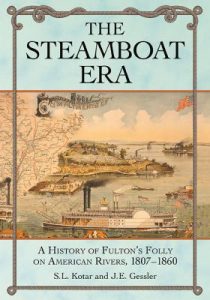
In this authoritative book by SL Kotar and JE Gessler the steamboat era is laid out from beginning to end. From the creation of “Fulton’s Folly” to the domination of transportation around the Civil War this is the tale of these mighty steamships as they plied their way from New Orleans to Natchez to all the way to St. Louis. This is a must read for anyone who loves steam technology.
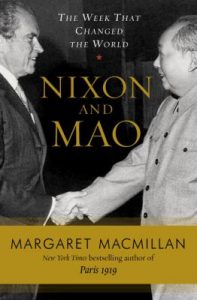
Author Margret MacMillian writes this informative book on one of the most famous diplomatic overtures of the last century. When the U.S. President Richard Nixon met with China’s President Mao Zedong in 1972 it seemed as if a lightning bolt struck out of a clear sky. Both sides viewed the event through their respective goals which continue to shape our relationship even today.
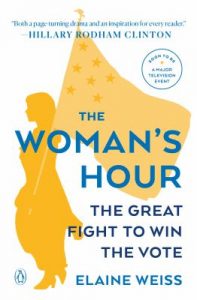
Journalist Elaine Weiss writes in this epic book that the phrase “we the people” never rang more hollow than with America denying its women the right to vote. “The Women’s Hour” focuses on the last desperate struggle to pass the 19th Amendment. The book’s attention is on Tennessee in August of 1920; the final state holdout in the fight for women’s right to vote.
In this moving and personal memoir targeted at Jr. High and High school readers author Jeanne Wakatsuki Houston, along with her husband, recount her experiences as a child in the Japanese internment camp Manzanar during WWII, and the lifelong effect it had on her family. Over one hundred twenty thousand Japanese were interred during the war.
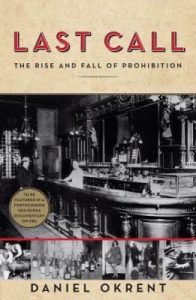
In this fascinating book by Daniel Oksent readers are plunged into the murky politics and bootleg dealings of the prohibition era. The unique combination of social movements in the 1920’s forced upon the general population an amendment to the Constitution that made the beer taps run dry. Despite significant effort made, the prohibition proved a failure.
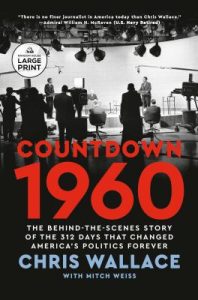
Few people other than television anchor Chris Wallace could write such a fascinating book on the 1960 Presidential Election between Richard Nixon and John F. Kennedy. He expertly weaves in the competing efforts both men and their allies made in their struggle for the white house. This is the tale of one of the first televised presidential elections, and its long term consequences.
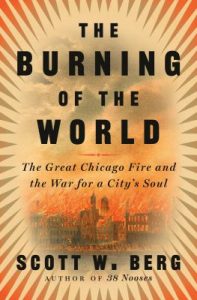
In October of 1871, Chicago was America’s youngest metropolis and the most fire-prone. In this engaging work Author Scott Berg manages to capture the horrible disaster of the 1871 fire for modern readers. From the fire’s supposed origins in Mrs. O’Leary’s barn, to the utter desolation it left in its wake, this book aptly describes the toll of one of the worst fires in American history.
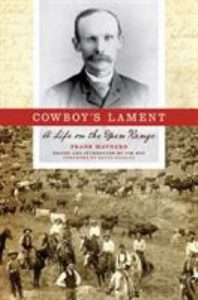
Researcher Jim Hoy unearths the memoirs of Frank Maynard, a sixteen year old boy who left his home in Iowa to become a cowboy on the open range in the 1870’s. There Meynard would drive horses and cattle between Kansas, Texas, and also Colorado while coming across outlaws and famous lawmen. This book is a first-hand view of a now vanished period of history.
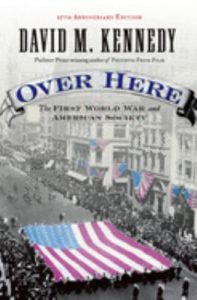
When the fighting in WWI started few in America truly cared. Separated by more than just an ocean, our country preferred isolationism to “fighting in someone else’s war”. However the shock of unrestricted naval warfare forced President Woodrow Wilson to wage it regardless. This book by David M. Kennedy, adeptly explains how the “Great War” changed America.
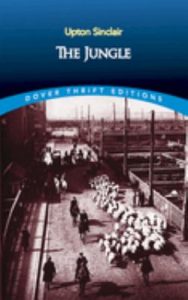
Of his brutal and yes, oftentimes disgusting novel on the meat packing industry of the early 1900s, author Sinclair famously said “ I aimed at the public’s heart and by accident hit it in the stomach”. While Sinclair’s aim was to promote socialism, the novel’s reception went a different direction. Buy revealing the horrifying and unsanitary conditions it spurred the Pure Food and Drug Act.
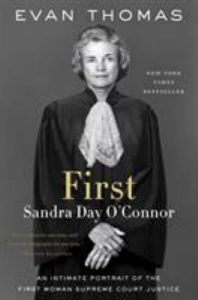
In this thorough story of Sandra Day O’ Connor, the 1st woman elected to the Supreme Court, Author Evan Thomas goes into all the details of her rise. From her early days on her family’s ranch to her graduating near the top of her class from Stanford Law in 1952 she struggled to break the “glass ceiling” until finally she was nominated by President Ronald Reagan in 1982.
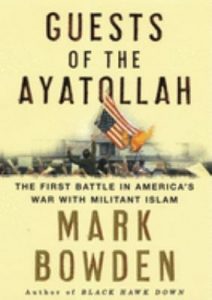
Author Mark Bowen chronicles the Iran Hostage Crisis in this detailed book. When a student protest led by Ayatollah Khomeini stormed the US embassy the world changed. The failed rescue attempt ordered by President Gerald Ford cost him his election and the political capital he had in the Middle East. This conflict sowed the seeds of unrest that we’re still dealing with today.
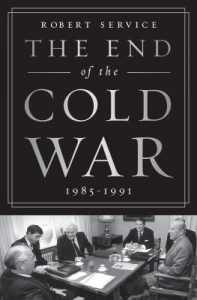
Robert Service’s “The End of the Cold War” is the definitive chronicle of an equally definitive time. Drawing on the archives of both the United States and the Soviet Union, he goes into great detail how President Ronald Reagan, and Premier Mikhail Gorbachëv managed to draw the generations-long conflict to its final conclusion, without widespread bloodshed.
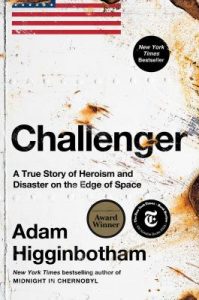
Author Adam Higginbotham writes this excellent book on one of NASA’s most heartbreaking tragedies. When one of the most inconspicuous parts, a simple O-ring, failed (due to cold temperatures) the space shuttle Challenger exploded killing the entire crew. This disaster and its subsequent investigation would shake NASA’s very core and force changes in how they operated.
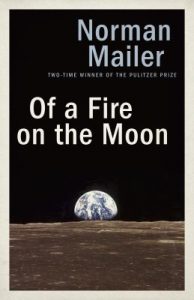
The idea that the renowned renegade author Norman Mailer would write a book on NASA’s space program and the 1969 Apollo moon landing is a little surprising… but Mailer pulls it off with impeccable style. This is an informative book on Apollo 11’s moon landing and the details of Neil Armstrong’s first steps on the moon. A must read.
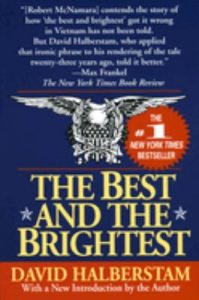
David Halberstam, a former magazine journalist, wrote this authoritative book on the Vietnam war. In this book he discusses how America inherited and expanded the French Indochina War and ultimately lost Vietnam. Given the brilliant minds in the Kennedy-Johnson administration, this book questions their failure to foresee the outcome of the war.
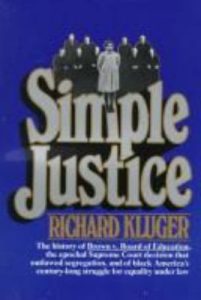
This is Richard Kluger’s detailed account on the Supreme Court’s Brown vs. the Board of Education ruling and its aftermath. In its May 17th 1954 ruling, the Supreme court made judicial history by ending segregation in schools. This unanimous ruling overturned decades of precedent and in the process proved a catalyst for the burgeoning civil rights movement.
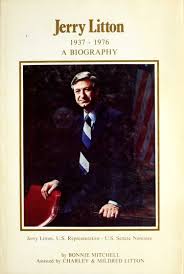
Bonnie Mitchell’s biography recounts the life of a beloved U.S. Representative Jerry Litton. A rising political star from Chillicothe, Missouri Jerry Litton’s life, and that of his family, was tragically cut short on the eve of his victory in the 1976 Democratic primary for the U.S. Senate. This is the true account of a man who many believed would become a U.S. President.
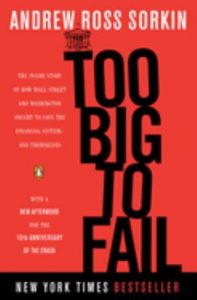
The New York Times financial reporter, Andrew Ross Sorkin, details the September 2008 flirtation with a massive worldwide depression. After years of poisonous sub-prime loans took down Bear Stearns and then the Lehman Brothers, the nation’s “financial Gurus” were panicking. This is the story of how they managed to salvage the crisis at a terrible cost to the US Treasury.
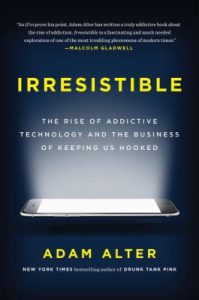
This book by Adam Alter isn’t so much as history as much as a grim portrait of our United States’s addiction to the technology we pioneered. In this book it details the costs in time, money, and even attention spans caused by our excessive love of “tech”. This should lead to some serious introspection, which in our current age is ever more unlikely.
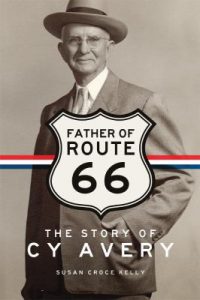
Of all the roads in the United States, the indisputably most famous is Route 66. In this excellent book Author Susan Croce Kelly chronicles the lifelong dream of one of the individuals who made it happen. Cy Avery’s efforts to get a road through his beloved Tulsa Oklahoma would eventually culminate in the construction of the legendary Route 66.
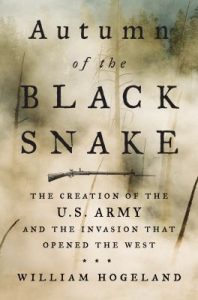
This is the story of the birth of the U.S. Army written by William Hogeland. After a devastating defeat of irregular US forces by confederations of Native Americans, President Washington ordered Brigadier General “Mad” Anthony Wayne to form a more disciplined force. Anthony defeated the confederation, which made him the “Father of the U.S. Army”.